
1. Introduction: Why Modern Manufacturers Need a Plasma Polishing Machine
Modern manufacturing is under pressure: labor shortages, rising polishing costs, and limited production capacity are becoming major challenges. Traditional polishing methods—manual polishing, mechanical buffing, tumbling, or vibratory polishing—can no longer support today’s demand for stable quality and mass-production finishing. Factories dealing with stainless steel, aluminum alloy, copper, zinc alloy, titanium alloy, or irregular-shaped precision components need faster, safer, and more consistent finishing solutions.
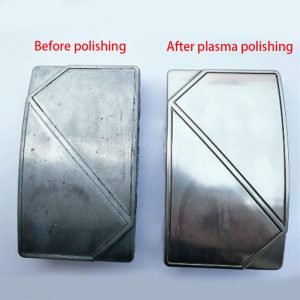
A Plasma polishing machine has quickly become the best polishing machine for manufacturers aiming to increase efficiency, reduce cost, and maintain outstanding finishing quality. Capable of polishing hundreds of parts at once while minimizing manual labor, plasma polishing represents the future of automated surface finishing.
2. Key Advantages of a Plasma Polishing Machine
A plasma polishing machine is a professional polishing machine that uses plasma electrolytic reactions to remove microscopic roughness, burrs, and oxide layers from metal surfaces. Unlike traditional polishing that relies on grinding or friction, plasma polishing uses ionized particles to achieve precise, uniform surface finishing.
It is now widely recognized as one of the most advanced forms of surface polishing machines, ideal for mass-production environments.
2.1 Labor Reduction & Automation Options
With plasma polishing, workers only need to load and unload parts. The process can also be fully automated with robotic arms. This significantly reduces manual labor and improves production efficiency.
2.2 High-Efficiency Mass Polishing
JinYuan’s plasma polishing machine can polish hundreds of pieces in one batch, making it ideal for companies struggling with output or tight delivery schedules.
2.3 Superior Surface Finishing Quality
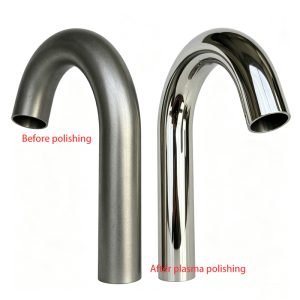
The process delivers consistent mirror-like finishing without over-cutting or scratching. Even complex surfaces achieve high uniformity.
2.4 Lower Overall Polishing Cost
Plasma polishing dramatically reduces labor cost, consumable cost, and rework rates—resulting in significantly lower total polishing cost.
2.5 Easily Polishes Complex / Irregular Shapes
Irregular, hollow, curved, or internal structures that are hard to polish traditionally can be finished easily with plasma technology.
3. Supported Materials & Industries
A plasma polishing machine can polish:
-
Stainless steel
-
Copper
-
Aluminum alloy
-
Zinc alloy
-
Titanium alloy
-
Kovar alloy
-
Precision metal components
Industries include electronics, automotive, aerospace, medical instruments, metal hardware, and more.
4. Plasma Polishing Machine vs Traditional Polishing
| Method | Drawbacks | Plasma Advantage |
|---|---|---|
| Manual polishing | Labor-intensive, inconsistent | Uniform, automated |
| Mechanical buffing | Generates heat, scratches | Smooth, stable finish |
| Vibratory polishing | Slow, limited precision | High precision, fast |
| Chemical polishing | Safety concerns | Eco-friendly and controlled |
5. How Plasma Polishing Works (Step by Step)
-
Load or hang parts
-
Parts enter plasma reaction tank
-
Plasma electrolytic effect removes micro-roughness
-
Burrs and oxide layers dissolve
-
Surface becomes smooth and bright
-
Hundreds of pieces polished in one cycle
6. How to Choose the Best Polishing Machine
Choosing the best polishing machine requires evaluating more than just the appearance or basic functions of the equipment. A truly suitable machine should match your production scale, material needs, automation goals, and long-term cost efficiency. Below are the key factors to consider when selecting a professional polishing machine:
6.1 Production Capacity Requirements
Before choosing a machine, determine your daily and monthly polishing volume.
-
Large factories require a surface polishing machine capable of processing hundreds of parts per batch.
-
Small or medium-sized factories may focus on flexibility and cycle-time efficiency.
Choosing a machine with adequate capacity ensures stable output and avoids production bottlenecks.
6.2 Material Compatibility
Different polishing machines support different metals. Ensure the machine can handle:
-
Stainless steel
-
Copper & brass
-
Aluminum alloy
-
Zinc alloy
-
Titanium alloy
-
Irregular or precision components
A machine with wide material compatibility will reduce equipment investment and increase process flexibility.
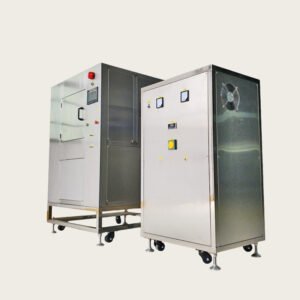
6.3 Automation Level
Modern manufacturers face labor shortages, so automation is critical.
Evaluate whether the machine supports:
-
Automatic loading and unloading
-
Robot arm integration
-
Intelligent parameter control
-
Batch processing mode
Higher automation reduces labor cost and ensures consistent surface quality.
6.4 Safety & Environmental Features
A high-quality professional polishing machine should include:
-
Stable electrical protection
-
Leakage prevention
-
Temperature monitoring
-
Safe working environment without harmful gases
Plasma polishing machines are safer than chemical polishing and meet strict environmental standards.
6.5 Stability and Efficiency of the Equipment
Pay attention to whether the machine can provide:
-
Consistent mirror finishing
-
Uniform polishing for complex shapes
-
Low rework rate
-
Long-term stable operation
A stable surface polishing machine reduces maintenance cost and improves yield rate.
6.6 Polishing Machine Price Comparison
The polishing machine price varies depending on:
-
Machine size
-
Production capacity
-
Automation level
-
Technical configuration
-
After-sales support
Choose a machine that offers the best balance between cost and long-term value—not just the lowest price.
6.7 Availability & Service Support
Check whether the manufacturer provides:
-
Quick delivery for polishing machine for sale
-
Professional technical training
-
Fast after-sales support
-
Spare parts supply
Reliable service ensures uninterrupted production and long-term stability.
7. Why Choose JinYuan’s Plasma Polishing Machine
JinYuan offers one of the most advanced professional polishing machine options on the market.
Advantages include:
-
20+ years metal finishing experience
-
Able to polish hundreds of pieces per batch
-
Stable and repeatable mirror finishing
-
Supports complex shapes and multiple materials
-
Reliable polishing machine for sale worldwide
8. Polishing Machine Price: What Affects Cost?
Polishing machine price depends on:
-
Machine size
-
Required capacity
-
Degree of automation
-
Material compatibility
-
Additional features
9. Conclusion: The Future of Surface Finishing Is Plasma Polishing
As demand for high-quality, high-efficiency manufacturing increases, plasma polishing machines are becoming essential for metal finishing. With automation support, excellent consistency, and mass-production capability, they are redefining what a best polishing machine should be.
FAQs
1. Is a plasma polishing machine safe to use?
Yes. Plasma polishing is environmentally friendly and safer than chemical polishing.
2. What metals can be polished?
Stainless steel, copper, aluminum alloy, zinc alloy, titanium alloy, Kovar alloy, etc.
3. How many parts can be polished at once?
Hundreds of pieces in one batch.
4. Is the polishing uniform?
Yes, the finish is highly consistent and repeatable.
5. What is the typical polishing machine price?
Price depends on size, automation, and production capacity requirements.


 English
 Français
 Deutsch (Schweiz)
 Italiano
 Русский
 한국어