
📖 Chapter 1: Introduction
In today’s high-precision manufacturing world, surface finishing is no longer just about aesthetics—it directly impacts product performance, durability, and value. Traditional polishing methods such as mechanical grinding and chemical polishing are increasingly struggling to meet the demands of modern industries.
Plasma polishing technology is emerging as a revolutionary solution. Unlike conventional approaches, a плазменная полировальная машина enables uniform, stress-free, and highly controlled surface finishing—even on the most complex geometries.
From aerospace to medical devices, manufacturers are rapidly adopting plasma polish systems to achieve higher efficiency, better consistency, and environmentally friendly production.
📖 Chapter 2: What is a Plasma Polishing Machine?
A plasma polishing machine is an advanced surface finishing system that uses electrochemical plasma to remove microscopic material from a metal surface. This process results in ultra-smooth, चमfered, and bright finishes without mechanical contact.
Unlike traditional polishing machines, plasma polishing does not rely on abrasives or physical force. Instead, it creates a plasma envelope around the workpiece, allowing controlled and uniform material removal at the microscopic level.
This makes plasma polishing technology particularly suitable for:
- Complex internal structures
- Fine holes and blind holes
- Precision components with strict tolerances

📖 Chapter 3: How Plasma Polishing Technology Works
To truly understand why a plasma polishing machine is so powerful, it is essential to explore the science behind plasma polishing technology. Unlike conventional polishing, which depends on mechanical abrasion or chemical reactions alone, plasma polishing combines electrochemistry and high-energy plasma physics into a single controlled process.
At the core of plasma polishing is the formation of a plasma envelope around the workpiece. When a high voltage is applied in a specially formulated electrolyte, the liquid near the metal surface begins to vaporize, forming a thin gas layer. As the voltage increases, this gas layer ionizes and transforms into plasma.
This plasma layer plays a critical role:
- It acts as a uniform energy field
- It enables micro-level material removal
- It smooths peaks on the surface without damaging valleys
As a result, the plasma polish process naturally levels the surface, creating a bright and mirror-like finish.
Step-by-Step Plasma Polishing Process
1. Immersion in Electrolyte
The metal part is submerged in a conductive electrolyte solution.
2. Voltage Application
High voltage is applied between the workpiece (anode) and the cathode.
3. Gas Film Formation
A vapor layer forms due to localized heating.
4. Plasma Generation
The gas layer ionizes into plasma under strong electric fields.
5. Controlled Material Removal
Surface peaks dissolve faster than valleys, achieving leveling.
Why Plasma Polishing is So Precise
The precision of plasma polishing technology comes from its time-controlled material removal mechanism. Unlike grinding, where force determines removal, plasma polishing is governed by electrical parameters and exposure time.
Typical removal rates:
- Stainless steel: ~1–5 μm/min
- Extremely stable and predictable
This allows manufacturers to:
- Maintain tight tolerances
- Avoid over-polishing
- Ensure repeatability in batch production
Key Factors Affecting Plasma Polishing Performance
- Voltage & Current Stability
Stable electrical input ensures uniform polishing - Electrolyte Composition
Neutral salt solutions are commonly used for safety and consistency - Temperature Control
Proper cooling prevents overreaction - Processing Time
Directly controls material removal amount
A New Paradigm in Surface Finishing
Plasma polishing is not just an incremental improvement—it represents a paradigm shift. By eliminating mechanical contact and leveraging plasma energy, it overcomes long-standing limitations of traditional polishing methods.
For industries demanding ultra-clean, precise, and consistent finishes, plasma polishing machines are quickly becoming the preferred solution.
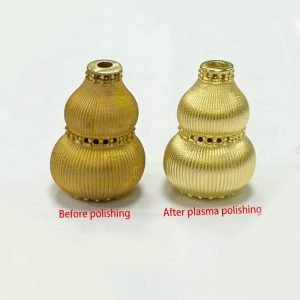
📖 Chapter 4: Plasma Iron Polisher vs Traditional Iron Polishing Methods
When it comes to finishing iron-based components, manufacturers have long relied on mechanical polishing, grinding, and chemical treatments. However, with increasing demands for precision, consistency, and efficiency, these traditional methods are facing clear limitations.
A plasma iron polisher, powered by advanced plasma polishing technology, offers a fundamentally different approach—one that eliminates many of the bottlenecks associated with conventional polishing processes.
This chapter provides a direct comparison to help you understand why more manufacturers are switching to plasma polishing machines.
🔍 4.1 Processing Capability Comparison
Traditional polishing methods rely on physical contact, which makes it extremely difficult—if not impossible—to process complex internal structures such as blind holes, deep cavities, threads, and intersecting channels.
In contrast, plasma polishing forms a uniform plasma layer around the entire surface, allowing it to reach areas that mechanical tools simply cannot access.
Key Difference:
- Traditional: Limited to accessible surfaces
- Plasma polish: Full coverage, including hidden geometries
⚙️ 4.2 Efficiency and Process Integration
Traditional processes often require multiple steps: deburring → grinding → polishing → buffing. Each step adds time, labor, and variability.
A plasma polishing machine integrates multiple functions into a single process:
- Deburring
- Edge rounding (chamfering)
- Surface polishing
This dramatically reduces processing time and simplifies production workflows.
📏 4.3 Precision and Dimensional Control
One of the biggest challenges in traditional polishing is maintaining dimensional accuracy. Excessive grinding or inconsistent manual operation often leads to over-removal and tolerance issues.
Plasma polishing technology, however, enables highly controlled material removal at the micron level. The process is time-based and predictable, making it ideal for precision components.
🛡️ 4.4 Surface Quality and Consistency
Mechanical polishing often leaves behind scratches, tool marks, or uneven finishes—especially in batch production.
Plasma polish produces:
- Uniform brightness
- Scratch-free surfaces
- Consistent mirror-like finishes
This makes it especially valuable in industries where surface quality directly impacts performance, such as medical and aerospace applications.
🌱 4.5 Environmental and Safety Comparison
Traditional polishing processes generate:
- Dust and debris
- Noise pollution
- Hazardous chemical waste
In contrast, plasma polishing machines typically use neutral salt-based electrolytes and operate without physical abrasion, resulting in a cleaner and safer working environment.
📊 4.6 Cost and ROI Analysis
While the initial investment in a plasma polishing machine may be higher than traditional equipment, the long-term benefits are substantial:
- Reduced labor costs
- Higher yield rates
- Faster production cycles
- Lower rework rates
Over time, these advantages translate into a strong return on investment (ROI).
✅ 4.7 Summary: Why Plasma Iron Polisher is the Future
The comparison is clear: plasma polishing is not just an alternative—it is a superior solution for modern manufacturing challenges.
For iron and steel components requiring high precision, complex geometry handling, and consistent surface quality, plasma iron polish systems are quickly becoming the industry standard.

📖 Chapter 5: Core Advantages of Plasma Polishing Machines
In modern manufacturing, choosing the right surface finishing method is not just about improving appearance—it directly affects product quality, production efficiency, and overall competitiveness. A plasma polishing machine stands out because it solves multiple challenges simultaneously.
Unlike conventional methods, plasma polishing technology delivers a combination of precision, efficiency, and flexibility that is difficult to achieve with traditional polishing systems.
🔧 5.1 No Dead Angles for Complex Structures
One of the most powerful advantages of plasma polishing machines is their ability to handle extremely complex geometries. Traditional polishing tools are limited by physical access, but plasma polishing works through an energy field that surrounds the entire workpiece.
This allows it to process:
- Blind holes
- Deep internal channels
- Threads and micro-holes
- Irregular curved surfaces
Even the most difficult-to-reach areas can be polished evenly and efficiently.
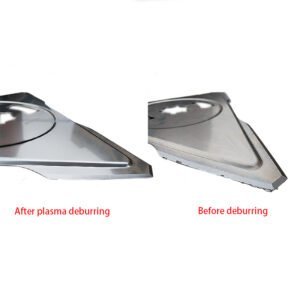
⚙️ 5.2 Deburring, Chamfering, and Polishing in One Step
A major limitation of traditional polishing is the need for multiple processes. Plasma polishing integrates several critical finishing steps into a single operation.
With one plasma polish cycle, you can achieve:
- Complete burr removal
- Uniform edge rounding (R angle)
- Smooth and bright surface finish
This not only saves time but also eliminates inconsistencies between processes.
📏 5.3 Ultra-Precise Material Removal Control
Precision is critical in industries such as aerospace, medical devices, and precision electronics. Plasma polishing technology enables highly controlled material removal at the micron level.
Typical removal rates are extremely stable, allowing manufacturers to maintain tight tolerances without compromising part integrity.
🛡️ 5.4 Stress-Free and Non-Contact Processing
Traditional polishing methods apply mechanical force, which can lead to deformation, scratches, or surface damage—especially for thin or delicate parts.
Plasma polishing is a completely non-contact process. There is:
- No mechanical pressure
- No tool friction
- No risk of deformation
This makes it ideal for fragile, thin-walled, or high-precision components.
✨ 5.5 Superior Surface Quality and Consistency
Surface quality is a defining factor in product performance. Plasma polishing machines produce highly uniform finishes across all parts, even in large-scale production.
Key results include:
- Scratch-free surfaces
- Uniform brightness
- Mirror-like finishes
This level of consistency is difficult to achieve with manual or semi-automated polishing methods.
🌱 5.6 Environmentally Friendly and Safer Production
Environmental regulations are becoming stricter worldwide. Plasma polishing technology aligns well with green manufacturing trends.
Compared to traditional methods, it offers:
- No dust pollution
- Low noise levels
- No strong acids or hazardous chemicals
- Easier waste liquid treatment
This makes it an ideal solution for modern, compliant factories.
🚀 5.7 High Efficiency for Mass Production
Efficiency is a key driver in manufacturing. Plasma polishing machines significantly reduce processing time while increasing throughput.
Typical benefits include:
- Processing time: seconds to minutes per part
- Multiple parts processed simultaneously
- Высокий потенциал автоматизации
This makes plasma polishing especially suitable for large-scale industrial production.
🔩 5.8 Wide Material Compatibility
Another major strength of plasma polishing machines is their versatility across different conductive metals.
Compatible materials include:
- Нержавеющая сталь
- Iron and steel alloys
- Copper and aluminum
- Zinc alloys
- Titanium alloys
This flexibility allows one system to serve multiple applications.
✅ 5.9 Summary: A Game-Changer in Surface Finishing
The advantages of plasma polishing machines go far beyond incremental improvements. They represent a complete transformation in how manufacturers approach surface finishing.
From complex geometries to precision control, from environmental benefits to automation readiness—plasma polishing is setting a new industry standard.
📖 Chapter 6: Materials Compatible with Plasma Polishing Technology
One of the most compelling advantages of a plasma polishing machine is its wide compatibility with different conductive metals. Unlike traditional polishing methods that often require different tools or processes for different materials, plasma polishing technology offers a more universal and adaptable solution.
This flexibility makes plasma polishing machines highly valuable for manufacturers dealing with diverse product lines and materials.
🔩 6.1 Stainless Steel: The Most Widely Used Material
Stainless steel is the most common material processed by plasma polishing machines. Due to its corrosion resistance and widespread use in high-end applications, achieving a flawless surface finish is critical.
Plasma polishing delivers:
- Mirror-like finishes
- Improved corrosion resistance
- Removal of micro-burrs and contaminants
It is widely used in:
- Medical instruments
- Food-grade equipment
- Precision industrial components
🛠️ 6.2 Iron and Steel Alloys (Plasma Iron Polisher Applications)
Iron-based materials are widely used in structural and industrial components, but they often present challenges such as oxidation, burr formation, and uneven surfaces.
A plasma iron polisher effectively addresses these issues by:
- Removing sharp edges and burrs
- Enhancing surface smoothness
- Preparing surfaces for coating or plating
This makes plasma polishing ideal for automotive, machinery, and hardware industries.
⚡ 6.3 Copper and Aluminum: High Conductivity Metals
Copper and aluminum are essential in electrical and electronic industries due to their excellent conductivity. However, these materials are relatively soft and prone to over-polishing in traditional processes.
Plasma polishing technology offers better control, ensuring:
- Minimal material loss
- No over-etching
- Smooth and clean surfaces
This is particularly important for:
- Electrical connectors
- Heat sinks
- Электронные компоненты
🔗 6.4 Zinc Alloys: Ideal for Precision Die Casting Parts
Zinc alloys are widely used in die casting due to their excellent fluidity and dimensional stability. However, post-processing is often required to remove burrs and improve surface finish.
Plasma polishing machines are highly effective for zinc alloy components because they:
- Smooth complex surfaces
- Improve appearance quality
- Maintain dimensional accuracy
This makes them perfect for industries like:
- Consumer electronics
- Decorative hardware
- Automotive accessories
🚀 6.5 Titanium Alloys: High-End and Difficult Materials
Titanium alloys are known for their strength, corrosion resistance, and lightweight properties, but they are notoriously difficult to machine and polish.
Plasma polishing technology is particularly effective for titanium because it:
- Reduces surface roughness without mechanical stress
- Maintains structural integrity
- Enhances biocompatibility (important for medical use)
Applications include:
- Aerospace components
- Медицинские имплантаты
- High-performance engineering parts
⚙️ 6.6 Powder Metallurgy Components
Powder metallurgy parts often have complex shapes and porous surfaces, making them difficult to polish using traditional methods.
Plasma polishing machines provide an efficient solution by:
- Penetrating microstructures
- Removing surface irregularities
- Enhancing density and finish
This makes plasma polish ideal for high-precision sintered components.
⚠️ 6.7 Material Limitations and Considerations
While plasma polishing technology is highly versatile, it is primarily suitable for conductive materials. Non-conductive materials such as plastics or ceramics cannot be processed directly.
Additionally, different materials require:
- Specific electrolyte formulations
- Adjusted voltage and current parameters
- Controlled processing time
Choosing the right setup is essential for achieving optimal results.
✅ 6.8 Summary: One Machine, Multiple Material Solutions
The ability of plasma polishing machines to process a wide range of metals makes them an extremely versatile investment. Whether working with stainless steel, copper, titanium, or powder metallurgy parts, plasma polishing technology provides consistent, high-quality results.
For manufacturers seeking flexibility and scalability, this is a major competitive advantage.
📖 Chapter 7: Industrial Applications of Plasma Polishing Machines
The true value of a plasma polishing machine is best demonstrated through its real-world applications. Across industries, manufacturers are adopting plasma polishing technology not just as an alternative—but as a competitive advantage.
From ultra-precision medical components to large-scale automotive production, plasma polishing is transforming how surface finishing is performed.
🏥 7.1 Medical Devices and Surgical Instruments
In the medical field, surface quality is directly linked to safety and performance. Even microscopic burrs or roughness can lead to contamination risks or tissue damage.
Plasma polishing machines are widely used for:
- Surgical instruments
- Implants and orthopedic parts
- Stainless steel medical tools
Key benefits include:
- Ultra-smooth, bacteria-resistant surfaces
- No mechanical stress or contamination
- Improved biocompatibility
🚗 7.2 Automotive and Precision Hardware Industry
The automotive industry demands both high efficiency and consistent quality. Components such as gears, fuel system parts, and connectors require precise finishing to ensure performance and durability.
Plasma polishing technology helps manufacturers achieve:
- Burr-free precision parts
- Improved fatigue resistance
- Enhanced surface finish for better assembly
It is especially effective for high-volume production environments.
✈️ 7.3 Aerospace and High-Performance Engineering
Aerospace components often involve complex geometries and high-performance materials such as titanium alloys. Traditional polishing methods struggle to meet these demands.
Plasma polishing machines provide:
- Precision finishing for complex internal structures
- No deformation on thin or lightweight parts
- Consistent results under strict tolerances
This makes plasma polishing a preferred choice in high-end engineering sectors.
📱 7.4 Electronics and Precision Components
In electronics manufacturing, miniaturization and precision are critical. Components such as connectors, terminals, and micro metal parts require flawless surfaces.
Plasma polishing is ideal for:
- Removing micro-burrs
- Improving conductivity surfaces
- Ensuring uniform quality in mass production
It supports the production of high-performance electronic devices.
🛁 7.5 Sanitary, Decorative, and Consumer Products
For consumer-facing products, appearance is just as important as functionality. Plasma polishing machines help manufacturers achieve premium finishes without complex manual processes.
Typical applications include:
- Bathroom hardware
- Decorative metal parts
- Consumer electronics casings
Преимущества:
- Bright, mirror-like surfaces
- Consistent visual quality
- Reduced manual polishing costs
🏭 7.7 General Manufacturing and Custom Applications
Beyond specialized industries, plasma polishing machines are also widely used in general manufacturing. Their flexibility allows them to adapt to custom parts and diverse production needs.
Applications include:
- Custom metal parts
- Tooling and molds
- Small-batch precision components
This versatility makes plasma polishing machines a long-term investment for many factories.
✅ 7.8 Summary: One Technology, Multiple Industries
Plasma polishing machines are not limited to a single industry—they are a cross-industry solution. Their ability to handle complex geometries, deliver consistent quality, and support mass production makes them indispensable in modern manufacturing.
As industries continue to demand higher precision and efficiency, the role of plasma polishing technology will only grow stronger.

📖 Chapter 8: How to Choose the Right Plasma Polishing Machine
Choosing the right plasma polishing machine is not just a technical decision—it directly impacts production efficiency, product quality, and long-term costs. With many options available from different polishing machine manufacturers, understanding the key selection criteria is essential.
🔍 8.1 Choose Based on Material Type
Different metals require different electrical characteristics and process stability.
- Stainless steel / iron / powder metallurgy → Standard plasma polishing machine
- Copper / aluminum / zinc alloy → Stable current control required
- Titanium / high-performance alloys → High-power professional systems
📏 8.2 Consider Part Size and Structure
- Small parts → Compact tanks + multi-fixture systems
- Medium parts → Standard tank machines
- Large parts → Custom large tanks or gantry systems
- Complex internal structures → Strong circulation system required
📦 8.3 Production Capacity Matters
- Low volume → Single-tank machine
- Medium volume → Dual-tank system
- High volume → Automated multi-station production line
✨ 8.4 Surface Finish Requirements
- Deburring only → Standard machine
- Mirror finish → High-end power control system
- Tight tolerance → Precision-controlled system
💰 8.5 Budget vs Configuration
- Limited budget → Standard machine
- Long-term investment → Industrial-grade system
- Automation goal → Fully automatic system
🏭 8.6 Choosing the Right Manufacturer
A reliable China polishing machine supplier should provide:
- Process support (electrolyte + parameters)
- Sample testing capability
- Fast after-sales service
📖 Chapter 9: Why China Polishing Machine Manufacturers Are Leading the Market
China polishing machine manufacturers have become global leaders due to their ability to combine cost efficiency with advanced manufacturing capabilities.
Ключевые преимущества включают:
- Competitive pricing
- Mature plasma polishing technology
- Strong customization capability
- Fast production cycles
📖 Chapter 10: Future Trends in Plasma Polishing Technology
The future of plasma polishing technology is closely aligned with smart manufacturing and sustainability.
Emerging trends include:
- Full automation and robotic integration
- AI-based parameter optimization
- Green electrolyte systems
- Integration into Industry 4.0 production lines



 Русский
 English
 Français
 Deutsch (Schweiz)
 Italiano
 한국어