
Chapter 1: Introduction – Surface Finishing Is No Longer Just “Polishing”
For decades, surface finishing was considered a simple final step in manufacturing—just making metal look smooth and shiny. However, modern industry has changed this perception completely. Today, surface quality directly determines product performance, assembly precision, and even brand value.
Traditional electrolytic polishing methods rely on chemical corrosion to remove surface irregularities. While effective to a certain extent, this approach is fundamentally uncontrolled at the micro level. It removes material unevenly, often sacrificing precision for brightness.
In contrast, the emergence of the плазменная полировальная машина represents a shift from chemical reaction control to plasma-state energy engineering. Instead of relying on aggressive acids, plasma polishing uses an ionized environment to gently and uniformly etch the surface at a microscopic level. This leads to a higher degree of consistency, especially for complex geometries and precision components.
As global manufacturing demands higher accuracy and cleaner production processes, industries are no longer just searching for a лучший полировальный станок—they are looking for a профессиональный полировальный станок that can deliver repeatable, ultra-precise results.
This is where the debate between electrolytic polishing and plasma polishing begins: not just as two techniques, but as two completely different philosophies of surface engineering.
Chapter 2: The New Era of Precision Finishing – From Corrosion to Controlled Energy
Surface finishing technology has evolved through several industrial eras. It started with mechanical grinding, moved into chemical polishing, then electrochemical processes, and now is entering the era of plasma-controlled surface engineering.
Electrolytic polishing belongs to the chemical-electrical era, where material removal depends on acid-based reactions. It is effective but inherently unstable, as the process depends heavily on electrolyte concentration, temperature, and current distribution.
Modern manufacturing, however, requires consistency at micron-level precision. This is where advanced systems such as the плазменная полировальная машина redefine the standard. Instead of relying on unstable chemical reactions, plasma polishing uses controlled energy states to achieve uniform surface removal.
Because of this shift, companies are increasingly upgrading from traditional systems to лучший полировальный станок platforms that integrate stability, automation, and repeatability.
In high-end manufacturing environments, a профессиональный полировальный станок is no longer optional—it is a core production asset.
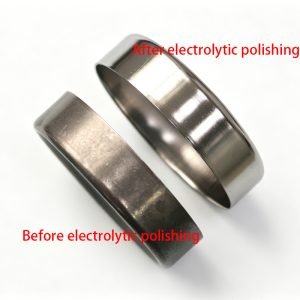
Chapter 3: Fundamental Working Principles – Two Completely Different Worlds
At a glance, electrolytic polishing and plasma polishing may appear similar because both involve surface material removal. However, their physical mechanisms are fundamentally different.
Electrolytic polishing works through anodic dissolution in an acidic electrolyte. The process removes material unevenly based on microscopic current density differences.
Plasma polishing, however, forms a thin plasma layer above the surface. Within this energized environment, high-energy particles interact with the surface atoms, enabling ultra-uniform micro-etching without relying on aggressive chemical corrosion.
This is why a плазменная полировальная машина behaves more like a precision energy tool than a chemical tank. It is not about dissolving metal—it is about controlling atomic-level surface interaction.
This fundamental difference is also why manufacturers of China полировальная машина systems are rapidly investing in plasma-based technologies.
Chapter 4: Surface Quality Comparison – From “Shiny” to True Mirror Precision
Surface appearance is often the first factor customers evaluate, but not all “shine” is equal.
Electrolytic polishing can produce a reflective surface, but it often suffers from haze, uneven brightness, flow marks, and localized over-corrosion. Deep holes and complex structures are particularly difficult to treat uniformly.
Plasma polishing achieves a different level of surface quality. The result is not just brightness but optical-grade uniform reflection—commonly referred to as true mirror polishing machine performance.
Even complex internal geometries such as blind holes and microchannels can achieve consistent polishing results.
This is why plasma technology is becoming the preferred solution for industries that demand visual perfection and functional precision.
Chapter 5: Deburring Capability – The Hidden Battle of Micro Defects
Burr removal is one of the most critical yet overlooked aspects of surface finishing.
Electrolytic polishing is effective for large burrs but struggles with micro burrs, cross-hole burrs, and internal sharp edges. These residual defects can lead to assembly issues or product failure.
Plasma polishing, however, excels in micro-scale consistency. It naturally rounds edges and removes burrs even in inaccessible internal geometries.
This capability significantly improves product reliability, especially in precision mechanical assemblies where microscopic defects matter.
Chapter 6: Dimensional Accuracy – Why Microns Matter in Modern Manufacturing
In precision manufacturing, dimensional stability is more important than surface brightness.
Electrolytic polishing removes material in an uncontrolled manner, often resulting in uneven corrosion and dimensional deviation. This can compromise tight-tolerance components.
Plasma polishing allows controlled material removal at the micron level. This ensures that part geometry remains stable even after finishing.
For industries such as medical devices, aerospace components, and micro-electronics, this level of precision is essential.
Chapter 7: Environmental and Safety Perspective – The Silent Revolution
Environmental compliance is becoming a global manufacturing requirement.
Electrolytic polishing relies on strong acids, producing corrosive fumes and hazardous waste. It requires strict safety control and expensive waste treatment systems.
Plasma polishing typically uses near-neutral electrolyte solutions and operates in a cleaner environment. This reduces health risks and environmental burden significantly.
As industries move toward green manufacturing, plasma technology is increasingly aligned with global sustainability goals.


Chapter 8: Application Scenarios – Choosing the Right Technology
Electrolytic polishing is still suitable for large, rough components where appearance precision is not critical.
Plasma polishing is designed for high-precision applications such as:
- 3C electronics components
- Medical instruments
- Jewelry and decorative hardware
- Precision mechanical parts with complex structures
This selection logic is widely adopted by leading China polishing machine factory manufacturers who focus on global industrial standards.
Chapter 9: Equipment Ecosystem – Machines Behind the Technology
Behind every polishing result is a system of engineering equipment.
A modern плазменная полировальная машина integrates plasma generation systems, control units, and precision motion platforms.
A reliable polishing machine manufacturer focuses not only on hardware but also on process stability and automation integration.
Today, leading China polishing machine suppliers compete globally by offering fully automated and intelligent polishing systems.
Chapter 10: Future Trend – Why Plasma Will Redefine Mirror Finishing
The future of polishing is not manual control but intelligent automation.
Plasma polishing systems are increasingly integrated with AI-based process optimization, real-time monitoring, and smart production lines.
This evolution positions the профессиональный полировальный станок as a central component of Industry 4.0 manufacturing ecosystems.
Eventually, plasma-based systems may replace many traditional polishing processes entirely in high-precision industries.

FAQ – Plasma Polishing vs Electrolytic Polishing
1. Is plasma polishing better than electrolytic polishing?
Yes, for precision, consistency, and environmental performance, plasma polishing is superior.
2. Can plasma polishing replace electrolytic polishing completely?
Not entirely. Electrolytic polishing still works for rough, low-precision applications.
3. What industries use plasma polishing machines?
Medical, electronics, jewelry, aerospace, and precision hardware industries.
4. Is plasma polishing more expensive?
Initial equipment cost is higher, but long-term efficiency and stability reduce overall cost.
5. What is the lifespan of a polishing machine system?
Typically 5–10 years depending on usage and maintenance.
6. How to choose the best polishing machine?
Focus on precision requirements, material type, automation level, and manufacturer capability.



 Русский
 English
 Français
 Deutsch (Schweiz)
 Italiano
 한국어