
📘 Chapter 1: Introduction — Why Corrosion Resistance Matters More Than Ever
In today’s highly competitive manufacturing landscape, corrosion resistance is no longer just a desirable feature—it is a critical requirement. From medical implants to marine hardware, the durability of metal components directly determines product lifespan, safety, and brand reputation.
However, many manufacturers still rely on traditional finishing methods that fail to address the root cause of corrosion: surface micro-defects. Scratches, residual stress layers, and microscopic contamination often act as hidden triggers for oxidation and chemical degradation.
This is where Plasmapolieren emerges as a transformative solution. Unlike conventional methods, a Plasmapoliermaschine operates at the microstructural level, enabling true surface refinement rather than superficial smoothing. As industries shift toward higher standards, the demand for a Profi-Poliermaschine that can simultaneously enhance surface quality and corrosion resistance is rapidly increasing.
In fact, many engineers now consider plasma-based systems among the beste Poliermaschine technologies available today—not just for aesthetics, but for functional performance.
📘 Chapter 2: What Is Plasma Polishing? Beyond Traditional Finishing
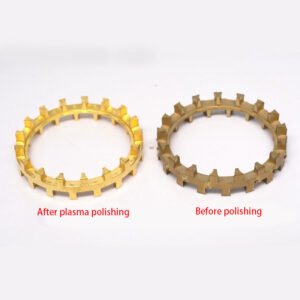
At its core, Plasmapolieren is an advanced surface finishing technology that utilizes ionized gas (plasma) to remove microscopic irregularities from a metal surface. Unlike conventional polishing methods that rely on mechanical abrasion or chemical dissolution, this process operates through controlled energy interactions at the atomic level.
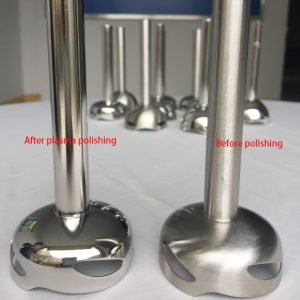
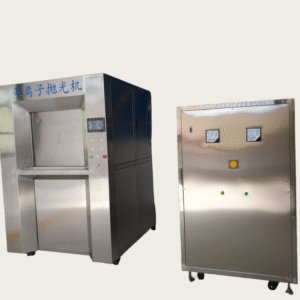
Inside a Plasmapoliermaschine, the workpiece is exposed to a high-energy plasma environment. The energized particles selectively remove peaks on the surface without aggressively attacking the base material. This results in an ultra-smooth, highly uniform finish that is difficult to achieve with traditional methods.
What makes plasma technology stand out is its ability to deliver both precision and consistency. While mechanical polishing often introduces new scratches and electropolishing may create uneven dissolution, plasma polishing maintains excellent control over material removal. This is why it is increasingly regarded as a Profi-Poliermaschine solution for industries requiring tight tolerances and high cleanliness standards.
Additionally, compared to traditional systems, modern plasma systems are more environmentally friendly. They typically require fewer harsh chemicals and generate less hazardous waste, making them an attractive option for sustainable manufacturing.
As global demand grows, many polishing machine manufacturer companies—especially leading China Poliermaschine suppliers—are investing heavily in innovation, making plasma-based solutions more accessible and cost-effective. Today, a well-designed system from a reliable polishing machine factory can rival or even outperform conventional polishing machine technologies.
📘 Chapter 3: The Hidden Link Between Surface Microstructure and Corrosion
When discussing corrosion, most people focus on external factors such as humidity, chemicals, or salt exposure. However, the real trigger often lies much deeper—within the metal’s surface microstructure.
Even a surface that appears smooth to the naked eye is, at the microscopic level, filled with irregularities: tiny grooves, pits, micro-cracks, and embedded contaminants. These imperfections act as localized “weak points” where corrosion begins. In electrochemical terms, they create micro-galvanic cells that accelerate oxidation and material degradation.
Traditional finishing methods, including mechanical polishing and even some mirror polishing machine processes, tend to improve visual smoothness but may not eliminate these micro-defects entirely. In fact, aggressive mechanical polishing can smear material, trap debris, or introduce new residual stress layers—further increasing corrosion susceptibility.
Another critical issue is the presence of a “damaged layer” formed during machining, stamping, or grinding. This layer often contains altered grain structures, tensile stresses, and chemical inconsistencies (such as chromium depletion in stainless steel). These characteristics make it significantly more reactive and vulnerable to corrosion.
This is why selecting the right Profi-Poliermaschine is not just about achieving a shiny finish—it’s about engineering the surface at a microscopic level. Advanced technologies like Plasmapolieren, enabled by modern Plasmapoliermaschine systems, directly target these hidden defects.
📘 Chapter 4: Does Plasma Polishing Improve Corrosion Resistance? (Core Answer)
Yes—plasma polishing significantly improves corrosion resistance, and in many applications, the improvement is not just incremental but substantial.
However, to truly understand this enhancement, it is important to move beyond the simplistic idea that “smoother equals better.” The real advantage of plasma polishing lies in its ability to fundamentally transform the surface condition at multiple levels—physical, chemical, and even electrochemical.
Unlike traditional finishing processes, a Plasmapoliermaschine does not merely reduce roughness; it restructures the surface into a more stable and uniform state. This transformation directly impacts how the material interacts with corrosive environments such as moisture, salt, acids, or biological fluids.
From an engineering perspective, corrosion resistance improves through four synergistic effects:
- Elimination of microscopic initiation sites
- Removal of unstable and reactive surface layers
- Formation of a more uniform and dense passive film
- Reduction of localized electrochemical activity
These effects work together rather than independently. That is why plasma polishing is often considered a next-generation Profi-Poliermaschine solution—not just for visual enhancement, but for functional performance improvement.
In many industries, especially those requiring high reliability (medical, marine, food processing), manufacturers are transitioning from conventional mirror polishing machine methods to plasma-based systems. Leading polishing machine manufacturer companies are actively promoting this shift, as real-world testing consistently demonstrates improved corrosion resistance.
A well-engineered system from a reliable polishing machine factory can deliver surfaces that are not only smoother but also significantly more resistant to oxidation, pitting, and chemical attack.
📘 Chapter 5: Mechanism 1 — Surface Homogenization & Defect Elimination
The first and most fundamental mechanism behind improved corrosion resistance in Plasmapolieren is surface homogenization—the process of eliminating microscopic defects that act as corrosion initiation sites.
Metal surfaces produced by machining, stamping, or grinding are inherently uneven at the micro level. They contain scratches, pits, grooves, and embedded particles. While these features may be invisible to the naked eye, they play a critical role in corrosion behavior. These irregularities trap moisture, chemicals, and contaminants, creating localized environments where corrosion can begin and rapidly propagate.
A Plasmapoliermaschine addresses this issue in a highly controlled way. Instead of mechanically abrading the surface, it selectively removes microscopic peaks through energy-driven interactions. This results in a surface that is not only smoother but also structurally more uniform.
The key advantage here is selectivity. Plasma polishing targets high-energy regions (peaks and defects) without aggressively removing material from stable areas. This ensures that the surface becomes homogenized rather than simply flattened.
From a corrosion standpoint, this transformation has a direct impact:
- Fewer micro-crevices for corrosive agents to accumulate
- Reduced likelihood of localized pitting corrosion
- Improved resistance to chemical penetration
- More uniform electrochemical behavior across the surface
In contrast, traditional methods using a mirror polishing machine may improve gloss but often leave behind sub-surface inconsistencies or even introduce new defects. This is why advanced industries are increasingly turning to Profi-Poliermaschine solutions based on plasma technology.
📘 Chapter 6: Mechanism 2 — Removal of Damaged Layers & Residual Stress
Beyond visible surface defects, another critical factor affecting corrosion resistance is the presence of damaged surface layers und residual stress introduced during manufacturing processes.
Operations such as machining, grinding, stamping, and cutting inevitably alter the outermost layer of metal. This “damaged layer” is typically only a few microns thick, but it contains significant structural and chemical inconsistencies. These may include distorted grain structures, tensile residual stresses, micro-cracks, and even localized compositional changes—such as chromium depletion in stainless steel.
From a corrosion perspective, this layer is highly unstable. It behaves differently from the underlying base material and is far more reactive in aggressive environments. In many cases, corrosion does not begin on the bulk material, but within this compromised surface zone.
This is where Plasmapolieren offers a distinct advantage. A Plasmapoliermaschine can precisely and uniformly remove this thin damaged layer without affecting the integrity of the base material. Unlike mechanical polishing, which may smear or redistribute the layer, plasma processing ensures its clean elimination.
The result is a surface that is:
- Structurally consistent with the base material
- Free from tensile stress concentrations
- Less prone to micro-crack propagation
- Chemically more stable and corrosion-resistant
Residual stress plays an equally important role. Tensile stress, in particular, accelerates corrosion processes such as stress corrosion cracking (SCC). By removing or significantly reducing this stress layer, plasma polishing enhances the long-term durability of the component.
Compared to traditional finishing methods or even some mirror polishing machine techniques, plasma technology provides a deeper level of surface refinement. This is why it is increasingly adopted as a Profi-Poliermaschine solution in high-performance applications.
Leading China polishing machine suppliers are continuously improving process control to ensure precise layer removal. A reliable system from a trusted polishing machine factory can consistently deliver stress-free, chemically stable surfaces—laying the foundation for superior corrosion resistance.
📘 Chapter 7: Mechanism 3 — Enhanced Passive Film Formation
While surface smoothness and defect removal are essential, the true breakthrough in corrosion resistance comes from what happens after polishing—specifically, the formation of a stronger and more stable passive film.
Most corrosion-resistant metals, such as stainless steel and titanium alloys, rely on a naturally occurring oxide layer (passive film) to protect themselves from environmental attack. This film acts as a barrier, preventing oxygen, moisture, and chemicals from penetrating the material.
However, the effectiveness of this passive layer depends heavily on the underlying surface condition.
A surface processed by a Plasmapoliermaschine provides the ideal foundation for passive film formation. Because Plasmapolieren creates a highly uniform, clean, and defect-free surface, the oxide layer that forms is:
- More continuous and uniform
- Denser and more compact
- Stronger in adhesion to the substrate
- More resistant to breakdown in aggressive environments
In contrast, surfaces treated with traditional methods or even some mirror polishing machine processes often contain micro-inconsistencies. These irregularities can disrupt passive film formation, leading to weak spots where corrosion can initiate.
Another key factor is chemical uniformity. Plasma polishing helps expose a more consistent material composition at the surface. For example, in stainless steel, a more uniform chromium distribution allows for the formation of a stronger chromium-rich oxide layer—significantly improving resistance to oxidation and chemical attack.
This is one of the reasons why plasma-based systems are increasingly regarded as the beste Poliermaschine solution for high-end applications. Industries such as medical devices, food processing, and marine engineering rely heavily on stable passive films for long-term performance.
📘 Chapter 8: Mechanism 4 — Edge Rounding & Electric Field Uniformity
The final, often overlooked mechanism behind improved corrosion resistance in Plasmapolieren is edge rounding and electric field uniformity.
In real-world components, corrosion rarely occurs uniformly across flat surfaces. Instead, it tends to initiate at geometrical irregularities—sharp edges, burrs, corners, and micro-protrusions. These features are not just physical defects; they are also regions of concentrated energy and electrochemical activity.
Sharp edges create localized electric field intensification. In corrosive environments, this leads to accelerated ion exchange and higher reaction rates, making these areas highly vulnerable to pitting and localized corrosion.
A Plasmapoliermaschine naturally addresses this issue through its unique material removal mechanism. Instead of uniformly removing material like traditional processes, plasma preferentially acts on high-energy regions—such as edges and peaks. This results in subtle but highly effective edge rounding at the micro level.
The benefits of this transformation include:
- Elimination of burrs that act as corrosion initiation points
- Reduction of localized electrochemical activity
- More uniform electric field distribution across the surface
- Lower risk of pitting corrosion and edge degradation
In contrast, traditional methods—even those using a mirror polishing machine—often struggle to treat complex geometries effectively. Mechanical polishing may leave behind micro-burrs, while chemical processes may not fully address sharp edge effects.
This is why advanced industries increasingly rely on Profi-Poliermaschine solutions based on plasma technology, especially for precision components with intricate geometries.
📘 Chapter 9: Material-Specific Performance — How Different Metals Respond to Plasma Polishing
While Plasmapolieren consistently improves corrosion resistance, the degree of improvement varies significantly depending on the material. This is because each metal has a unique chemical composition, oxide formation behavior, and sensitivity to surface conditions.
Understanding these differences is essential when selecting the right Plasmapoliermaschine and optimizing process parameters. A well-calibrated Profi-Poliermaschine can maximize performance for each specific material type.
Let’s break it down:
1. Stainless Steel (304 / 316L): The Most Noticeable Improvement
Stainless steel shows the most dramatic enhancement after Plasmapolieren. This is largely due to its reliance on chromium-rich passive films for corrosion protection.
Plasma polishing improves:
- Surface uniformity → stronger passive film formation
- Chromium distribution → more stable oxide layer
- Removal of micro-defects → fewer corrosion initiation points
As a result, stainless steel components demonstrate significantly improved resistance to:
- Rust formation
- Salt spray environments
- Chemical corrosion
This is why industries like medical devices, food processing, and marine engineering increasingly prefer plasma-treated stainless steel over surfaces finished with traditional mirror polishing machine methods.
2. Titanium Alloys: Superior Biocompatibility & Stability
Titanium naturally forms a protective oxide layer, but its performance is highly dependent on surface quality.
After plasma polishing:
- The oxide layer becomes more uniform and stable
- Surface contamination is minimized
- Resistance to body fluids and aggressive environments improves
This makes plasma-polished titanium ideal for:
- Medizinische Implantate
- Aerospace components
- High-performance engineering parts
Many polishing machine manufacturer companies now specifically design systems for titanium optimization, especially among advanced china polishing machine suppliers.
3. Aluminum, Copper, and Zinc Alloys: Indirect but Valuable Gains
For metals like aluminum, copper, and zinc alloys, the corrosion resistance improvement is more indirect—but still highly valuable.
Plasma polishing provides:
- Cleaner and more uniform surfaces
- Better adhesion for subsequent treatments (anodizing, plating, coating)
- Reduced surface contamination
These improvements enhance the effectiveness of secondary processes, which ultimately leads to better corrosion resistance.
For example:
- Aluminum benefits from stronger anodized layers
- Copper achieves more stable coatings
- Zinc alloys (commonly used in die casting) gain improved plating performance
Eine hohe Qualität polishing machine factory can tailor plasma parameters to ensure optimal preparation for these downstream processes.
Key Insight: One Technology, Multiple Outcomes
Unlike traditional polishing methods, plasma technology adapts well to different materials. Whether the goal is direct corrosion resistance (as in stainless steel) or process enhancement (as in aluminum alloys), a modern beste Poliermaschine solution delivers measurable benefits.
This versatility is one of the main reasons why plasma systems are rapidly replacing conventional finishing technologies across industries.
📘 Chapter 10: Plasma Polishing vs Other Technologies — Which Finishing Method Truly Wins?
In industrial surface finishing, different technologies compete to achieve the same goal: smoother surfaces and better corrosion resistance. The three most commonly compared methods are mechanical polishing, electropolishing, and plasma polishing.
However, their mechanisms and outcomes are fundamentally different, which leads to significant performance gaps in corrosion resistance.
1. Mechanical Polishing (Including Mirror Polishing Machines)
Mechanical polishing relies on physical abrasion using wheels, abrasives, or buffing tools. A mirror polishing machine can achieve excellent visual gloss, but its limitations are structural:
- May introduce micro-scratches
- Can embed abrasive particles
- Often creates residual stress
- Cannot fully remove damaged surface layers
While the surface may look perfect, corrosion resistance is not always improved proportionally.
2. Electropolishing
Electropolishing uses an electrochemical process to dissolve surface material. It can improve surface smoothness and remove some micro-defects.
Advantages:
- Good for stainless steel
- Removes burrs and peaks
- Improves surface cleanliness
Beschränkungen:
- Risk of uneven current distribution
- Difficult to control complex geometries
- Requires chemical handling and waste treatment
- May still leave sub-surface stress effects
3. Plasma Polishing (Next-Generation Solution)
A Plasmapoliermaschine uses ionized gas to selectively remove microscopic surface peaks without mechanical contact or aggressive chemical dissolution.
Die wichtigsten Vorteile:
- No mechanical damage or smearing
- No chemical over-etching risks
- Highly uniform surface energy distribution
- Simultaneous removal of defects and stress-affected layers
This is why plasma polishing is often considered the most balanced solution among all methods, especially for corrosion-sensitive applications.
4. Why Plasma Polishing Outperforms Others in Corrosion Resistance
The key difference is not just surface roughness—it is surface integrity.
Plasma polishing ensures:
- A defect-free surface foundation
- Stable passive film formation
- Reduced electrochemical hotspots
- Long-term environmental stability
This is why many industries now upgrade from traditional systems to Profi-Poliermaschine solutions based on plasma technology.
Leading polishing machine manufacturer companies are increasingly positioning plasma systems as the future of precision finishing. A high-quality system from a reliable polishing machine factory often delivers both mirror-level appearance and superior corrosion resistance—something traditional mirror polishing machine systems cannot consistently achieve.
📘 Chapter 11: Choosing the Right Equipment — From Factory Selection to Industrial Application
Even though plasma polishing clearly improves corrosion resistance, the final performance strongly depends on the quality of the equipment used. Not all systems deliver the same level of precision, stability, or industrial reliability. This is why selecting the right Plasmapoliermaschine is a critical engineering decision rather than a simple purchasing choice.
1. Key Factors When Selecting a Plasma Polishing Machine
A high-performance system should provide:
- Stable plasma generation and control
- Precise energy distribution for uniform polishing
- Adjustable parameters for different materials
- Consistent long-term operation without degradation
A poorly designed system may still improve surface appearance, but it will fail to deliver reliable corrosion resistance improvements.
2. Role of a Professional Polishing Machine Manufacturer
A reliable polishing machine manufacturer is not just a supplier—it is a process engineering partner.
High-quality manufacturers focus on:
- Process repeatability
- Material-specific optimization
- Automation and control systems
- Long-term equipment stability
This is especially important for industries requiring strict quality control, such as medical, aerospace, and marine applications.
3. China Polishing Machine Factories: Global Manufacturing Advantage
In recent years, china polishing machine suppliers and polishing machine factory production bases have become major global players.
Their advantages include:
- Strong industrial supply chains
- Rapid customization capabilities
- Competitive cost-performance ratio
- Continuous R&D improvements in plasma technology
Many global companies now source high-end Profi-Poliermaschine systems directly from China due to this combination of performance and efficiency.
4. Best Polishing Machine vs Application Matching
There is no universal “best polishing machine”—only the best match for a specific application.
- High precision medical parts → ultra-stable plasma systems
- Marine components → corrosion-focused plasma optimization
- Decorative mirror finish parts → hybrid plasma + finishing systems
Understanding the application is key to selecting the right technology.
5. Plasma Polishing Machine as a System, Not Just Equipment
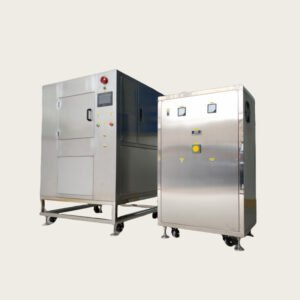
Modern plasma systems are no longer standalone machines. They are integrated surface engineering platforms combining:
- Plasma generation units
- Intelligent control systems
- Material-specific processing programs
This evolution is why plasma technology is rapidly replacing traditional mirror polishing machine solutions in high-end manufacturing.
📘 Chapter 12: Real-World Applications — Where Corrosion Resistance Matters Most
Understanding the theory behind plasma polishing is important, but its true value becomes clear only when we look at real-world applications. In industries where failure is not an option, corrosion resistance is not just a performance metric—it is a safety requirement.
A modern Plasmapoliermaschine is widely used across industries that demand extreme surface reliability, cleanliness, and long-term stability.
1. Medical Devices: Biocompatibility and Long-Term Stability
In medical applications such as surgical tools, implants, and diagnostic equipment, corrosion resistance directly impacts patient safety.
After Plasmapolieren:
- Surface becomes cleaner and more biocompatible
- Reduced risk of ion release into the body
- Improved stability in physiological environments
This is why plasma-based systems are increasingly replacing traditional mirror polishing machine processes in medical manufacturing.
2. Marine Industry: Extreme Corrosion Environments
Saltwater environments are among the most aggressive corrosion conditions.
Components such as:
- Valves
- Fasteners
- Propeller parts
- Offshore equipment
benefit significantly from plasma-treated surfaces.
A Profi-Poliermaschine ensures that surfaces resist pitting corrosion and chloride attack over long service cycles.
3. Food Processing Equipment: Hygiene and Chemical Resistance
Food-grade equipment must resist both corrosion and contamination buildup.
Plasma polishing helps by:
- Eliminating micro-crevices where bacteria can accumulate
- Improving cleanability of surfaces
- Enhancing resistance to acidic and alkaline cleaning agents
This makes it a preferred solution for hygienic manufacturing environments.
4. Aerospace and Precision Engineering
In aerospace systems, even microscopic corrosion can lead to performance degradation or failure.
Plasma polishing improves:
- Surface fatigue resistance
- Structural stability under stress
- Long-term oxidation resistance
As a result, many high-end components are now processed using advanced systems from a polishing machine manufacturer specializing in precision engineering.
5. Industrial Manufacturing and Die Casting Components
In mass production industries, especially metal forming and die casting, consistency is critical.
A reliable china polishing machine oder polishing machine factory solution ensures:
- Uniform corrosion resistance across batches
- Improved coating adhesion for post-processing
- Reduced defect rates in large-scale production
This is particularly important for zinc, aluminum, and copper alloy parts.
Key Insight: Corrosion Resistance as a System-Level Requirement
Across all industries, one pattern is clear: corrosion resistance is no longer just about the material—it is about the entire surface engineering process.
This is why plasma technology is increasingly seen as the beste Poliermaschine solution for high-reliability manufacturing environments.
📘 Chapter 13: Future Trends — Smart Surface Engineering & Plasma Technology
The surface finishing industry is entering a new era. Traditional mechanical polishing methods are gradually being replaced by smarter, cleaner, and more controlled technologies—especially plasma-based systems.
The future of the Plasmapoliermaschine is not just about improving surface smoothness, but about building an intelligent, data-driven surface engineering ecosystem.
1. From Manual Experience to Intelligent Control
In the past, polishing quality depended heavily on operator experience. Today, the trend is moving toward:
- Automated process control
- Real-time parameter adjustment
- AI-based quality prediction
Future systems will allow polishing machine manufacturers to integrate sensors and smart feedback loops, ensuring consistent results without manual intervention.
2. Integration with Industry 4.0
Plasma polishing is becoming part of smart factories.
Key developments include:
- IoT-connected polishing systems
- Centralized production monitoring
- Digital traceability of surface quality
A modern polishing machine factory is no longer just producing equipment—it is producing data-integrated manufacturing solutions.
3. Higher Precision for Micro- and Nano-Scale Manufacturing
As industries such as electronics, aerospace, and medical devices evolve, surface requirements are becoming more extreme.
Future plasma systems will achieve:
- Nano-level surface control
- Ultra-low roughness finishing
- Zero-defect surface consistency
This will further replace traditional mirror polishing machine technologies in high-end sectors.
4. Green Manufacturing and Sustainability
Environmental regulations are pushing manufacturers away from chemical-heavy processes.
Plasma polishing offers:
- Minimal chemical waste
- Lower environmental impact
- Reduced energy consumption compared to traditional polishing
This makes it a strong candidate for the next generation of sustainable manufacturing equipment.
5. Global Manufacturing Shift (China’s Role)
China is becoming a key hub for advanced surface finishing equipment.
Many china polishing machine suppliers are rapidly upgrading:
- Automation capability
- Precision engineering standards
- Export-level quality systems
This is helping Chinese equipment compete globally in high-end manufacturing markets.
Key Conclusion: The Future Is Smart Surface Engineering
The future of polishing is no longer just about “making surfaces smooth.”
It is about:
- Intelligence
- Präzision
- Sustainability
- System-level performance control
The evolution of the beste Poliermaschine will be defined by how well it integrates physics, data, and automation into one unified process.



 Deutsch (Schweiz)
 English
 Français
 Italiano
 Русский
 한국어