
1. Introduction: Why Surface Hygiene Matters More Than Ever in Medical Devices
In the medical device industry, hygiene is no longer limited to visible cleanliness—it extends to microscopic precision and material integrity. From surgical instruments to implantable components, even the smallest surface defect can become a risk factor for bacterial adhesion or corrosion.
This is where advanced technologies like the 플라즈마 연마기 redefine expectations. Unlike a traditional metal polisher machine, plasma-based finishing does not simply “smooth” a surface—it restructures it at a microscopic level.
Today, manufacturers are moving beyond conventional polisher machine solutions and adopting next-generation processes that ensure not only compliance but also long-term safety. The question is no longer whether surfaces look clean, but whether they are fundamentally hygienic.
2. What Is Plasma Polishing? Rethinking the Role of a Polishing Machine
Plasma polishing is an advanced electrochemical finishing process that uses ionized energy fields to remove microscopic irregularities from metal surfaces. Unlike a traditional polishing machine for metal, which relies on mechanical abrasion, a plasma polishing machine operates without physical contact.
This distinction is critical. Conventional polish machine systems often depend on abrasives, which can introduce secondary contamination or leave residues embedded in the material. In contrast, plasma technology eliminates peaks and smooths valleys at a micro level, creating a dense, uniform surface.
Rather than acting as a simple metal polisher machine, plasma systems function as precision surface optimizers. They are especially valuable in industries where cleanliness, consistency, and biocompatibility are non-negotiable—such as medical manufacturing.
3. Hygiene Is Not Just Clean—It’s Structural: A New Perspective
When discussing hygiene in medical devices, most manufacturers instinctively think about sterilization methods such as autoclaving or chemical cleaning. However, this approach overlooks a fundamental truth: hygiene begins at the structural level of the material surface.
A conventional 연마 장비 may produce a visually shiny surface, but under microscopic observation, that surface often contains grooves, scratches, and micro-pits. These imperfections become ideal environments for bacterial adhesion, biofilm formation, and contamination retention.
This is where plasma technology redefines hygiene. A plasma polishing machine does not merely improve appearance—it modifies the surface topology by eliminating microscopic peaks and valleys. The result is a dense, homogeneous structure that inherently resists contamination.
From an engineering perspective, this shift is crucial. Hygiene is no longer a downstream process achieved through cleaning—it is an upstream design feature enabled by the right polishing machine for metal. Manufacturers who understand this distinction gain a competitive advantage in high-end medical markets.
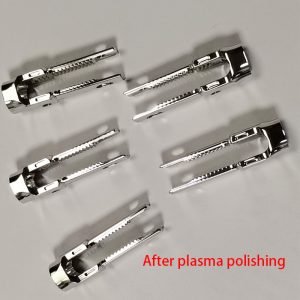
4. Eliminating Hidden Risks: How Plasma Polishing Removes Microbial Traps
Modern medical devices are no longer simple structures—they often feature highly complex geometries such as deep holes, blind cavities, internal channels, lattice structures, and micro-scale contours. While these designs improve functionality, they also introduce significant challenges in surface finishing and hygiene control.
Traditional metal polisher machine systems rely on direct mechanical contact. This means polishing tools, abrasive media, or buffing wheels must physically reach the target surface. In reality, this is nearly impossible for internal features or narrow geometries. As a result, burrs, sharp edges, micro-cracks, and unpolished zones often remain hidden inside the component.
These imperfections act as “microbial traps.” They create ideal conditions for bacteria, proteins, and biological residues to accumulate, even after standard cleaning and sterilization procedures. Over time, this can lead to biofilm formation, corrosion initiation, and increased clinical risk.
A plasma polishing machine solves this problem by fundamentally changing how surfaces are treated. Instead of relying on contact, it uses ionized energy fields to uniformly interact with all exposed surfaces. This allows it to penetrate and process deep cavities, blind holes, and complex internal structures with remarkable consistency.
The process not only removes burrs and sharp edges but also smooths micro-scale irregularities that are otherwise inaccessible. This ensures that there are no hidden zones where contaminants can accumulate.
For manufacturers using advanced production methods—such as CNC precision machining or powder metallurgy—this capability is especially critical. Choosing a high-quality polishing machine for metal that can address internal hygiene risks is essential for producing truly medical-grade components.
5. Ultra-Smooth Surfaces: The Science Behind Low Ra Values
Surface roughness (Ra) is one of the most critical parameters in determining whether a medical device meets hygiene and performance requirements. In conventional machining processes such as CNC milling, stamping, or turning, the resulting surface typically has an Ra value ranging from 1.6 to 3.2 μm. Even after basic finishing using a traditional metal polisher machine, it is often difficult to achieve ultra-low roughness consistently, especially on complex geometries.
A high-performance plasma polishing machine fundamentally changes this outcome. By utilizing electrochemical reactions driven by ionized energy, it selectively removes microscopic peaks while leveling surface valleys. This results in a significantly smoother and more uniform surface, with Ra values commonly reduced to below 0.1 μm—and in optimized conditions, even reaching mirror-like finishes of Ra ≤ 0.05 μm.
This reduction in roughness is not just about aesthetics. A smoother surface directly limits the ability of biological contaminants such as blood proteins, bacteria, and tissue residues to adhere. It also minimizes capillary effects that can trap fluids, making cleaning and sterilization far more effective.
Unlike a conventional polishing machine for metal, which often leaves directional scratch patterns, plasma polishing produces an isotropic surface structure. This means the surface behaves uniformly in all directions, improving both hygiene and functional performance.
For medical device manufacturers, achieving ultra-low Ra values is not optional—it is a prerequisite. Investing in the right polisher machine technology can be the difference between meeting regulatory standards and facing costly rejections.
6. No Abrasives, No Contamination: A Cleaner Manufacturing Logic
One of the most underestimated risks in traditional finishing processes is contamination introduced during polishing itself. Conventional polishing machine systems rely heavily on abrasives such as polishing compounds, grinding pastes, and buffing wheels. While effective in removing material, these abrasives can embed microscopic particles into the surface, especially in softer metals or complex geometries.
For medical devices, this presents a serious issue. Embedded abrasive residues can act as foreign bodies, potentially causing adverse biological reactions, compromising sterilization, or even leading to device failure in critical applications.
A plasma polishing machine eliminates this risk entirely by adopting a non-contact electrochemical approach. There are no abrasive materials involved, no mechanical friction, and no risk of particle embedding. The material removal process is controlled at the atomic or molecular level, ensuring a clean and residue-free surface.
In addition, modern polish machine factory solutions often utilize environmentally friendly electrolytes, further reducing the risk of harmful chemical residues. This aligns well with stringent medical standards and sustainability goals.
Compared to traditional polisher machine technologies, plasma polishing represents a paradigm shift—from “removing material with tools” to “refining surfaces with controlled energy.” This cleaner manufacturing logic is particularly valuable in high-end medical and implantable device production, where zero contamination is not just ideal, but mandatory.

7. Material Integrity: Why Medical Alloys Remain Biocompatible
In the medical device industry, material integrity is just as critical as surface cleanliness. Common medical-grade materials such as 316L stainless steel, titanium alloys (e.g., Ti-6Al-4V), cobalt-chromium alloys, and even advanced powder metallurgy components must maintain their original biocompatibility after any surface treatment.
Traditional polishing machine for metal processes—especially mechanical grinding or buffing—can introduce microstructural changes. These include residual stress layers, localized heating, and even phase transformation in extreme cases. While these effects may not be visible, they can negatively impact corrosion resistance and long-term stability inside the human body.
A plasma polishing machine fundamentally avoids these issues. As a non-contact electrochemical process, it removes material at a microscopic level without inducing mechanical stress or thermal damage. There is no deformation layer, no embedded abrasive particles, and no alteration to the base material’s crystalline structure.
This is particularly important for implantable devices. Even minor changes in surface chemistry or structure can trigger inflammatory responses or reduce osseointegration performance. Plasma polishing ensures that the surface becomes smoother and cleaner while preserving the intrinsic biological compatibility of the material.
For manufacturers working with high-precision or complex components—including those produced via powder metallurgy—this makes plasma polishing not just a finishing step, but a critical quality assurance process.
8. Consistency Matters: Uniform Finishing Inside and Out
Consistency is one of the most overlooked yet critical factors in medical surface finishing. A device may appear perfectly polished on the outside, but if internal surfaces remain rough or uneven, the overall hygiene and performance are compromised.
Traditional metal polisher machine systems are inherently limited by physical accessibility. Tools, abrasives, and polishing heads cannot effectively reach deep cavities, micro-holes, or intricate internal channels. This results in uneven finishing—smooth on the outside, but potentially hazardous on the inside.
A plasma polishing machine eliminates this limitation entirely. By using ionized energy fields rather than mechanical contact, it treats all exposed surfaces simultaneously—regardless of geometry. Internal channels, blind holes, and complex contours receive the same level of refinement as external surfaces.
This uniformity has direct implications for medical performance. Consistent surface roughness ensures predictable fluid behavior, reduces contamination risk, and enhances sterilization efficiency.
For manufacturers aiming to meet high-end medical standards, consistency is not optional—it is essential. Choosing the right polishing machine for metal can determine whether a product meets regulatory approval or fails quality inspection.
9. Regulatory Perspective: ISO & FDA Compliance
Compliance with international standards such as ISO 13485 and FDA regulations is a fundamental requirement for medical device manufacturers. Surface finishing plays a critical role in meeting these standards, particularly in areas related to cleanliness, corrosion resistance, and biocompatibility.
A high-quality plasma polishing machine supports compliance by delivering consistent, repeatable results that can be validated and documented. Unlike manual or semi-automatic polisher machine processes, plasma systems offer precise control over parameters such as voltage, current, and processing time.
Additionally, the absence of abrasive materials and the use of environmentally friendly electrolytes simplify the cleaning and validation process. There is less risk of contamination, and post-processing inspection becomes more straightforward.
From a regulatory standpoint, the ability to demonstrate process stability and repeatability is just as important as the final surface quality. This is where advanced polishing machine factory solutions provide a significant advantage.
10. Beyond Hygiene: Functional Benefits for Medical Devices
While hygiene is the primary concern, plasma polishing delivers a range of additional functional benefits that enhance the overall performance of medical devices.
One of the most significant advantages is improved corrosion resistance. By creating a dense and uniform surface, plasma polishing reduces the likelihood of pitting corrosion—a common issue in stainless steel and other alloys used in medical environments.
Another benefit is improved user interaction. Surgical tools processed with a plasma polishing machine have smoother edges and surfaces, reducing the risk of tissue damage and improving handling precision.
Additionally, smoother surfaces reduce friction, which is especially important in minimally invasive devices and moving components.
Compared to traditional polish machine methods, plasma polishing offers a more holistic improvement—not just in appearance, but in performance, safety, and durability.
11. Choosing the Right Equipment
Selecting the right equipment is a strategic decision that directly impacts product quality and compliance. Not all polish machine factory solutions are created equal, especially when targeting medical applications.
Key factors to consider include process stability, electrolyte safety, automation level, and experience in handling medical-grade materials. A reliable plasma polishing machine should offer precise control, repeatability, and compatibility with complex geometries.
Manufacturers should also evaluate the supplier’s track record, including case studies and certifications.
Ultimately, the right polishing machine for metal is not just a tool—it is a long-term investment in quality and compliance.
12. Future Trends: Plasma Polishing in High-Precision Medical Manufacturing
As medical technology advances, the demand for ultra-precision components continues to rise. Devices are becoming smaller, more complex, and increasingly reliant on advanced materials such as titanium alloys, cobalt-chromium, and powder metallurgy structures. This evolution is pushing traditional polishing machine for metal technologies to their limits.
A plasma polishing machine is uniquely positioned to meet these future challenges. Its non-contact processing capability makes it ideal for micro-scale components, including minimally invasive surgical tools, micro-implants, and intricate internal structures that cannot be treated effectively with a conventional metal polisher machine.
Another key trend is automation and digital integration. Modern polish machine factory solutions are incorporating intelligent control systems, enabling real-time monitoring, process optimization, and data traceability—critical for meeting strict medical regulations.
Sustainability is also becoming a major factor. Compared to traditional polisher machine systems, plasma polishing uses cleaner electrolytes and generates less waste, aligning with global environmental standards.
In the future, plasma polishing will not just be a finishing process—it will be an integral part of precision medical manufacturing ecosystems.

13. Conclusion: Is Plasma Polishing the Gold Standard for Medical Devices?
After examining its capabilities from multiple perspectives—hygiene, material integrity, surface consistency, and regulatory compliance—it becomes clear that plasma polishing is more than just an alternative finishing method. It represents a fundamental shift in how medical device surfaces are engineered.
Unlike traditional polishing machine, a plasma polishing machine addresses the root causes of contamination rather than simply improving surface appearance. By eliminating micro-defects, avoiding abrasive contamination, and preserving material properties, it delivers a truly medical-grade surface.
Moreover, its ability to process complex geometries uniformly and support advanced manufacturing trends makes it highly future-proof. For manufacturers aiming to compete in high-end medical markets, relying solely on conventional metal polisher machine solutions is no longer sufficient.
In this context, plasma polishing is not just compliant with industry standards—it is actively redefining them. While the “best” solution always depends on specific applications, plasma polishing has undoubtedly established itself as the gold standard for high-precision, high-cleanliness medical devices.



 한국어
 English
 Français
 Deutsch (Schweiz)
 Italiano
 Русский